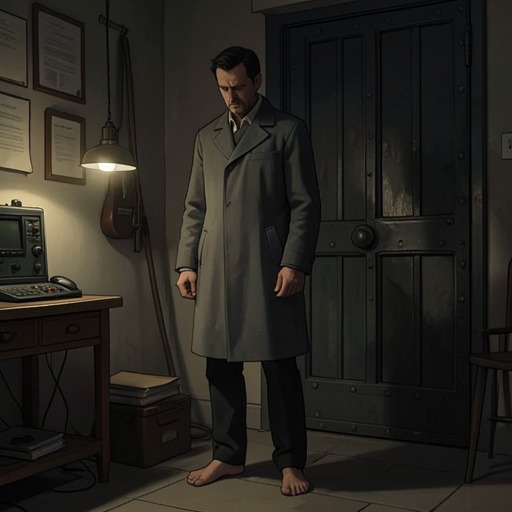
Simon repents and pursues corrupt police officers
The SonSimon’s repentance is a belated break with a criminal network he helped protect: after betraying his best friend, Ab Lofthus, he stops acting as a police mole and spends the remainder of his life pursuing corrupt officers and making amends. The change does not undo his earlier betrayal; it gives his later years the shape of penance.
The mole and the criminal network
For years, rumors circulated of a police mole leaking information to the person who controlled much of Oslo’s drug and sex-trafficking activity. The rumors remained unproven, and Simon initially describes them as old talk for which no one had produced evidence. The concealed reality was more complex than the police rumor suggested: two corrupt officers worked as moles, using their partnership to make each other’s presence less suspicious.
Simon’s later accusation against Iver Iversen identifies one channel through which the wider operation reached beyond the police. Simon says that Iversen Property helped the Twin launder money from drug and trafficking activities, receiving fictitious losses that generated tax savings worth hundreds of millions of kroner. Iversen denies knowing the Twin, but Simon says he has evidence that they worked together. The episode shows that the corruption Simon eventually hunts is not confined to individual officers; it is connected to business dealings and the concealment of criminal proceeds.
From complicity to betrayal
Simon’s involvement in the mole arrangement reaches its most consequential point when Ab Lofthus is willing to kill him to secure the sole place alongside the Twin. Simon contacts the Twin first and persuades him that Ab has discovered their identities and must be eliminated urgently. He casts the rivalry as a shared nightmare, then kills his best friend before Ab can kill him. His survival is achieved through the same criminal system he later rejects, and at the cost of a friendship that cannot be restored.
The circumstances make Simon’s eventual reform neither immediate nor clean. He has already helped sustain a network that depends on secrecy and betrayal, and his murder of Ab is the decisive act that binds him to its consequences. The account of his later life does not excuse that choice: repentance follows a grave act of self-preservation, rather than preceding it.
Repentance and pursuit
After Ab’s death, Simon stops being a mole. His turning point is described alongside Helene’s death: he has reached the end of the road and lost what remained for him to lose, leaving him with nothing more to fear. He then spends the rest of his life doing penance and making amends. His repentance takes practical form in an uncompromising pursuit of people who are corrupt as he once was.
That pursuit isolates him within the police. Simon earns few friends by hunting officers implicated in the same kind of corruption he had served, and he grows lonely. He does not treat that loneliness as an injustice to himself; he believes it is what he deserves. His daily self-loathing, recalled as the feeling of facing himself each morning in the mirror, makes the cost of reform personal as well as professional.
Meaning of the change
Simon’s later conduct establishes a distinction between remorse and repair. His repentance is not a revelation that erases Ab’s murder, but a continuing effort to oppose the corruption he once enabled. The narrative links that effort to his acceptance of punishment: he pursues others without expecting friendship or self-forgiveness in return.
The account also frames Simon’s rescue as something he ultimately accomplishes himself. He is described as having been called an angel by Kari, but Kari rejects the idea that her love saved him. Instead, she credits Simon’s own love for her with helping him save himself. That interpretation preserves the hard edge of his change: care may matter, but the decision to leave the mole’s role and live in penance remains Simon’s own.